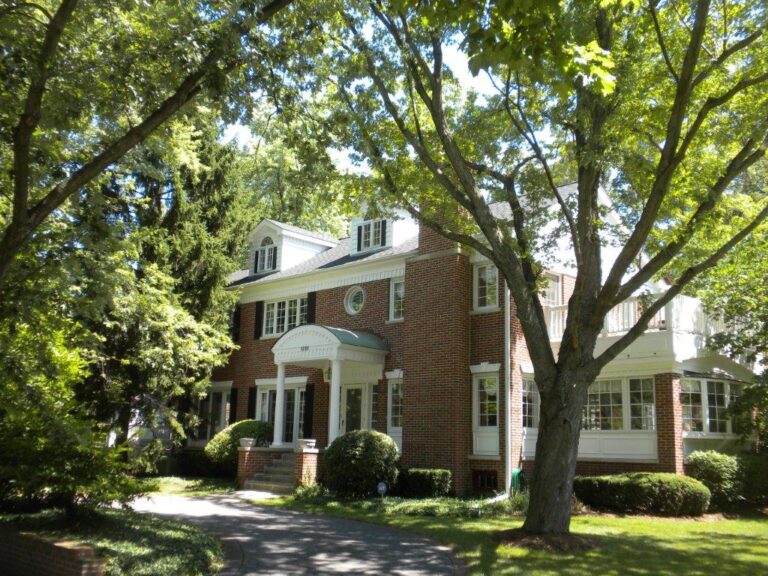

The most common exterior color mistake on the North Shore is not a bad color. It is a good color on the wrong house. A warm greige that looks perfect on a cedar ranch in Northbrook fights the orange brick on a Deerfield split-level. A crisp cool white that suits a Winnetka colonial makes a Tudor’s stucco look like primer. Start from the house, not from the paint chip, and the choice gets much easier.

Start With What You Cannot Change
Every house has fixed elements: brick, stone, the roof, and sometimes windows and stonework around the entry. The body color has to get along with those first.
- Brick and stone carry undertones, usually orange, red, pink, or tan. A body or trim color with the opposite undertone looks off; one that shares it looks intentional. Hold the chip against the brick in daylight before anything else.
- The roof is the biggest color on the house. Brown and tan roofs want warm bodies; gray and black roofs take cool or warm.
- Window frames that are clad in white, bronze, or black decide the trim color for you unless you plan to paint them.
- The neighborhood and the village. Historic districts in Winnetka, Kenilworth, Glencoe, and Lake Forest may review exterior colors. Check before you fall in love with one.
Tudor Homes
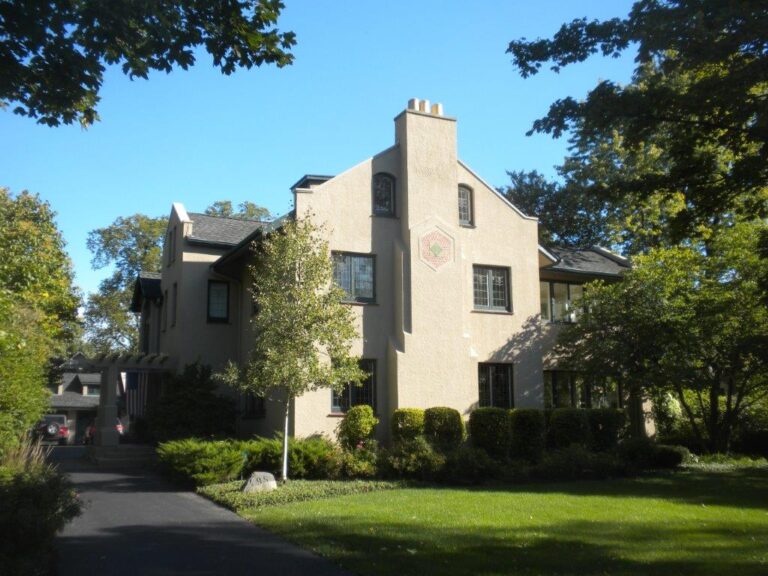
The Tudors in Winnetka, Kenilworth, Evanston, and Highland Park are stucco and half-timber over brick, and the classic scheme is the one they were built with: a warm white or cream stucco, dark timbers in espresso, charcoal, or near-black, and the brick left alone. Pure bright white stucco reads harsh against old brick; cream and warm off-white sit better. Timbers painted the same color as the trim and windows tie the whole elevation together. Doors go deep: oxblood, forest green, or black. The brick on a Tudor is almost always better cleaned and tuckpointed than painted.
Colonials
Colonials are the most forgiving house to color because the formula is settled: a single body color, white or off-white trim, shutters in a dark accent, and a door that picks up the shutters or contrasts them. Classic bodies are white, cream, pale yellow, and soft gray; the current favorites on the North Shore are warm whites and light greiges with black or deep green shutters. Dark bodies, charcoal or navy with white trim, work on larger colonials with plenty of windows. Keep shutters the width of the window they frame or paint them to disappear; undersized shutters in a loud color are the one thing that cheapens a colonial.
Brick Homes
If the brick stays, the job is choosing trim, soffit, fascia, shutter, and door colors that flatter it. Orange and red brick wants warm whites, creams, and tans on the trim, with black, bronze, or deep green on shutters and doors. Brown and tan brick takes cream, sage, and warm gray. Pink-toned brick, common on 1950s ranches in Glenview and Skokie, looks best with greige or taupe trim and charcoal accents rather than stark white. If the brick is going to be painted, limewashed, or stained, read whitewash vs limewash vs painted brick first; the color conversation changes completely.
Cedar, Wood Siding, and Shingles
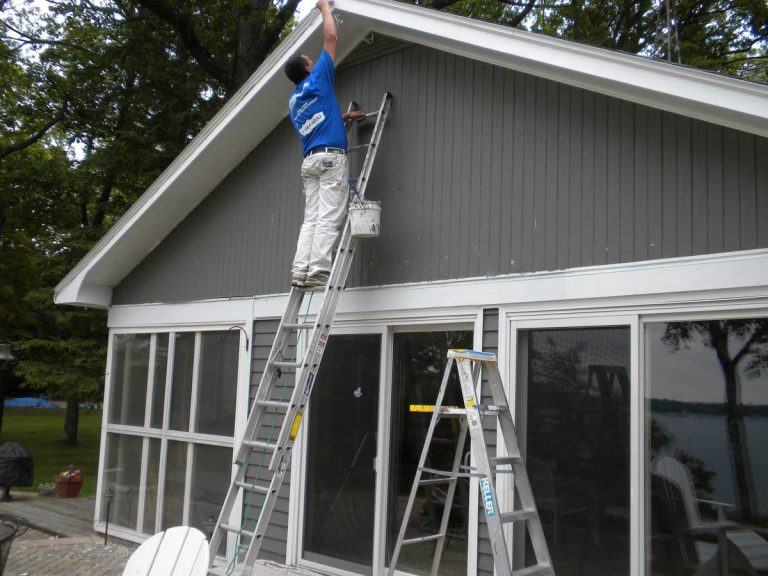
Cedar siding and shakes can be stained or painted, and the choice decides the palette. Semi-transparent stains show the grain and run to earth tones: cedar, driftwood, gray-brown, charcoal. Solid stains and paint open up the full range. On the lakefront shingle homes in Wilmette, Winnetka, and Lake Forest, gray-blue, driftwood gray, and warm taupe bodies with white trim are the enduring look. On cedar ranches and contemporaries, mid-tone greens, gray-greens, and deep browns settle the house into the trees. Our siding, stucco, and cedar painting page covers the prep each surface needs.
Mid-Century Ranches and Split-Levels
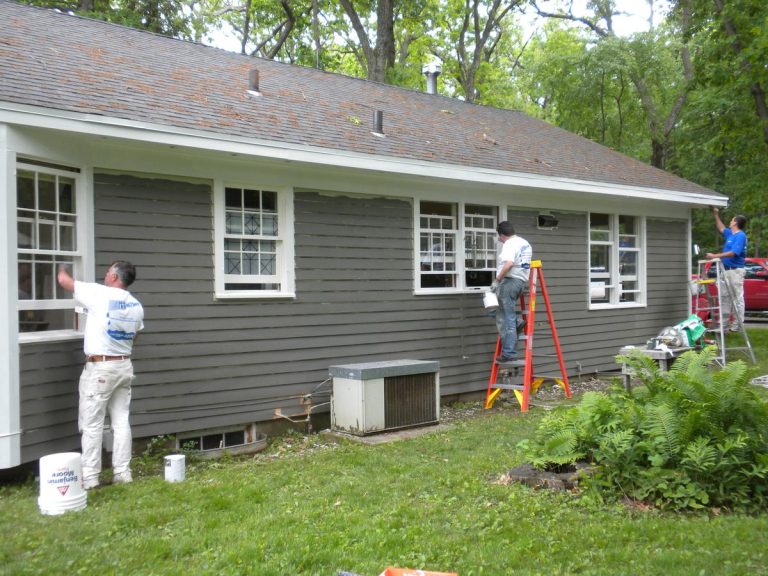
The ranches and splits of Northbrook, Glenview, Deerfield, and Morton Grove often mix brick below with siding above. Give the siding a color that is darker than the brick’s lightest tone and the house gains proportion; paint it lighter than the brick and the top floats. Warm grays, greiges, olive, and deep taupe are the workhorses, with the trim a shade or two lighter rather than bright white. A stained wood or boldly colored front door does the rest.
The Three-Color Formula
- Body: one color, the biggest decision.
- Trim: windows, fascia, soffit, corner boards, and porch columns. Lighter than the body on most houses, darker on modern ones.
- Accent: shutters and the front door. One strong color, used in two places at most.
Garage doors usually match the body or the trim so they recede; a garage door in the accent color turns the driveway into the focal point. Porch ceilings can take a pale blue or a soft version of the body color. More than three colors on a house is a decision for a Victorian, and a careful one.
White Is Not One Color
A warm white has a little yellow or red in it and reads soft; a cool white has blue or gray and reads crisp. Against red brick and brown roofs, warm whites belong. Against gray roofs, black windows, and stone, cool whites hold. A white that looks neutral on the chip will show its undertone the moment it covers a wall, which is why we never pick white from a chip alone.
Sheen Matters Outside
Flat and low-sheen finishes hide imperfections in old siding and stucco and look richer in deep colors. Satin on trim and doors wipes clean and gives the edges definition. Gloss belongs on front doors and nowhere else on most houses. Dark colors in high sheen show every lap mark; dark colors in flat look expensive.
How to Test Before You Commit
- Use the paint visualizer on a photo of your own house to narrow the field to two or three schemes.
- Paint sample boards, two feet square, and move them around the house. Look at them on the north side and the south side, at noon and at dusk. Colors go lighter and cooler in full sun and darker and warmer in shade.
- Look at the samples next to the brick, the roof, and the neighbors’ houses, not in isolation.
- Pick the body first, then trim, then accent. Changing the body last throws the other two off.
Pete gives color guidance on every walk-through and brings samples on request; it is part of the free estimate. Read how our estimates work.
Questions We Hear
Can you paint a house a dark color on the North Shore?
Yes. Dark bodies absorb more heat and fade faster on south walls, so we use a quality 100 percent acrylic with UV-stable pigments and a low sheen. Vinyl siding is the exception; it needs vinyl-safe colors.
Should the trim always be white?
No. Off-white, cream, and even a darker trim all work depending on the house. Bright white trim against a warm body can look like a mistake; a warm white usually fixes it.
What color should a painted brick house be?
Warm whites, soft grays, and greige hide the texture best and age well. See the exterior brick guide.
How many colors is too many?
Three is the rule; four if the house has real architectural detail to carry it.
Ready to Choose?
Call (847) 564-4880 or request a free estimate and Pete will bring samples to the walk-through. Read when to book exterior painting so the color you choose goes on this season. We paint exteriors from Northbrook across the North Shore, including Winnetka, Wilmette, Glenview, Evanston, Highland Park, Deerfield, and Lake Forest.