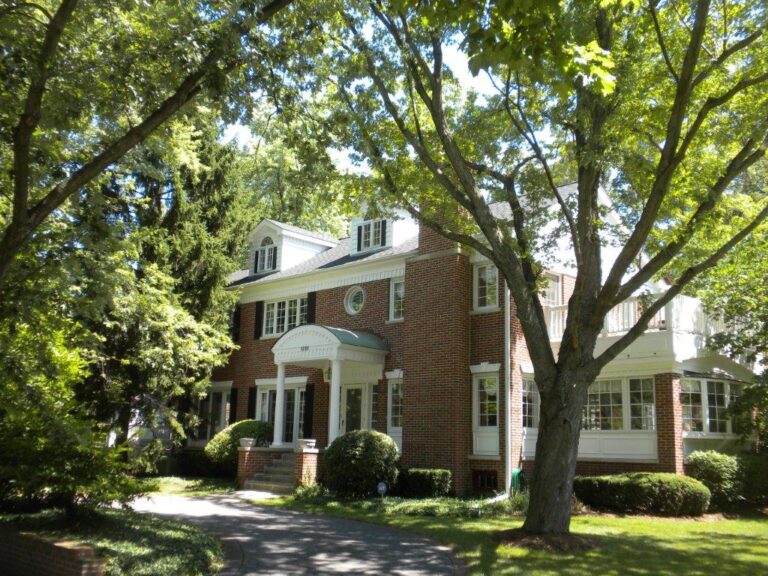

The lakefront villages have some of the best-built houses in Illinois: Winnetka and Kenilworth Tudors and colonials from the 1910s and 20s, Glencoe Prairie and Craftsman homes, Lake Forest estates from the Shaw and Adler era. They were built with old-growth lumber, lime mortar, and true divided-light wood windows, and they have outlasted three or four generations of paint. Painting one is not the same job as painting a 1990s colonial in a subdivision, and treating it the same way is how original siding ends up in a dumpster. Here is what changes.

Start With the Village
Winnetka, Kenilworth, Glencoe, and Lake Forest each have a historic preservation body, and many homes near the lake sit in a landmark district or carry a landmark designation. Repainting an existing color usually needs nothing, but a color change on a designated home, work on original windows, or replacing siding may need a review. We ask early, because a review that comes after the paint is on is an expensive conversation. The village staff are helpful and the process is quicker than people fear when it starts in winter rather than the week before the crew arrives.
Lead Paint Is a Given
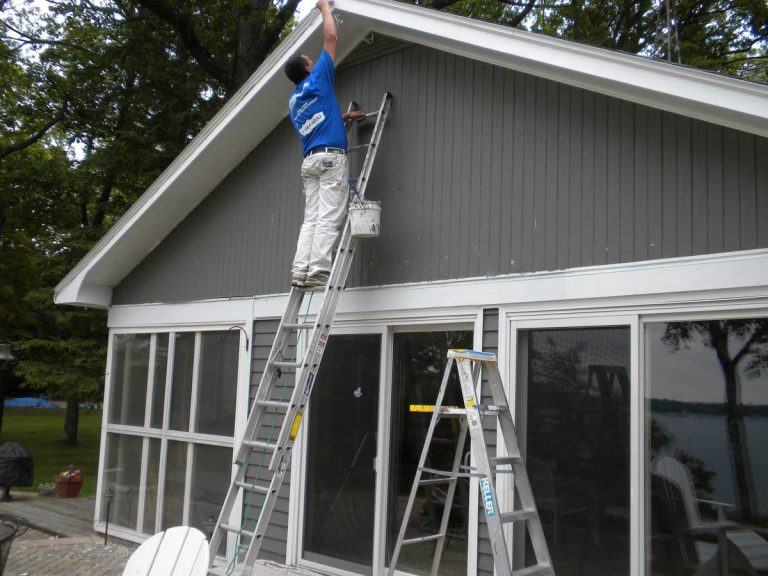
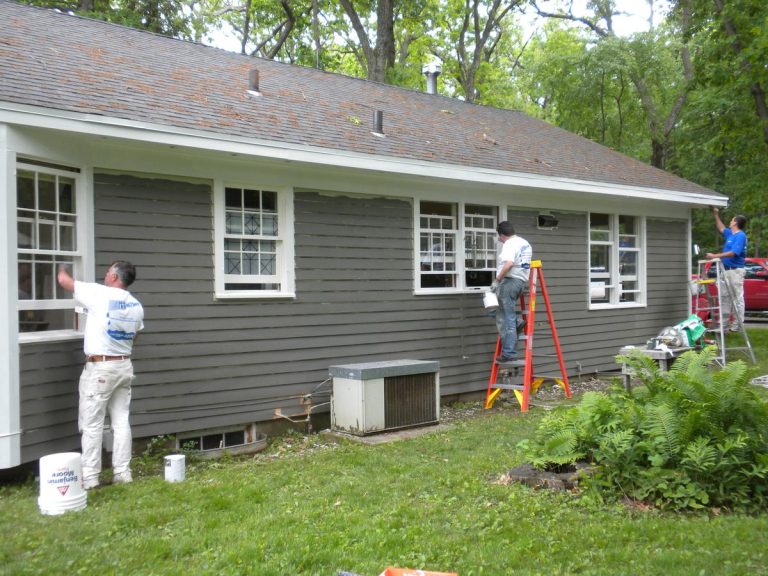
Any house built before 1978 is presumed to have lead paint, and a house from 1920 certainly does. Federal rules require a certified renovator and specific practices on exterior work that disturbs painted surfaces. We are EPA Lead-Safe certified, and on an old house that means:
- Ground and plantings covered with plastic sheeting out from the foundation, sealed at the wall.
- Wet scraping and hand sanding with HEPA-filtered sanders, never dry power sanding or open-flame removal.
- No high-pressure washing that blasts paint chips into the yard.
- Daily cleanup of chips and dust, and bagged disposal.
- Crew members trained in the rules and the reasons behind them. Children and pets stay away from the work zone.
This takes longer than conventional prep and is quoted that way. It is also the only correct way to paint a pre-1978 house.
Old Wood Is Worth Saving
The siding and trim on these homes are old-growth cedar, cypress, and fir with tight grain that modern lumber cannot match. Our rule is to repair before we replace:
- Soft spots at sills, column bases, and the bottoms of corner boards are consolidated with an epoxy wood hardener and filled with a two-part epoxy filler, then shaped and sanded. It outlasts a patch of new wood.
- Missing sections get a Dutchman repair: a matching piece of the same species let into the original, glued and fastened, invisible under paint.
- Replacement only where a board is gone, and then with primed cedar or a stable hardwood milled to the original profile, not a stock trim board that changes the lines of the house.
- Alligatored paint, the crazed buildup of a century of coats, is taken down to a sound layer by hand or with infrared heat where it is thick enough to need it, so the new finish is not riding on failed layers underneath.
Wood Windows and Glazing
Original wood sash with wavy glass are a defining feature and, properly maintained, a better window than most replacements. Painting them right means reglazing where the putty has cracked, priming the bare rabbets before new glazing compound, letting the compound skin over before paint, and lapping the paint a hair onto the glass to seal the putty line. Sash are painted so they still open; it takes more care than most crews give it.
Stucco, Brick, and Lime Mortar
Pre-war stucco and brick were built to breathe. Modern sealers and elastomeric coatings trap moisture inside the wall and cause spalling and rot. On these houses we use mineral or breathable acrylic masonry coatings on stucco, leave sound brick unpainted, and point mortar with a lime-based mix that matches the original hardness, never a hard Portland mortar that cracks the old brick around it. Our guides to painting exterior brick and limewash go deeper.
Colors That Belong to the House
Period-appropriate does not mean museum-dull; it means colors drawn from the era the house was built in, which usually look better on it than anything trendy.
- Tudor Revival (1910s to 30s): cream or warm white stucco, dark brown to near-black timbers and trim, natural brick, a deep-colored door.
- Colonial Revival: white, cream, or pale yellow bodies, white trim, black or dark green shutters, a black, red, or green door.
- Prairie and Craftsman (Glencoe especially): earth tones, olive, russet, and tan bodies with deep brown or green trim, stained rather than painted wood where it was originally stained.
- Victorian and Queen Anne: three to five colors picking out the trim, brackets, and shingle bands, in the muted historic palettes the paint companies publish.
- Lake Forest estates: often stucco, stone, or brick with limited paint; the painted elements are windows, doors, shutters, and ironwork, usually in black, bronze, or deep green.
Our guide to exterior paint colors for North Shore homes covers the three-color formula, and the paint visualizer lets you try a scheme on a photo of the house before any review.
Products for Old Wood
A century-old board that has carried oil paint for decades can be painted with a modern 100 percent acrylic, but only over a penetrating oil-based or alkyd bonding primer that grips the old surface and seals the tannins. Bare old-growth wood gets the same primer. On ironwork, railings, and light fixtures we strip rust to bright metal, prime with a rust-inhibiting primer, and finish in a direct-to-metal enamel. Where a homeowner wants a traditional linseed-oil paint system, we can do that too; it is slower to cure and the house has to be planned around it.
What to Expect From the Schedule
A historic exterior takes longer than a conventional one: lead-safe setup and cleanup, hand prep, epoxy repairs that cure between steps, glazing that skins before paint, and more brush work on detail. A large house can run two to three weeks of working days. Finish coats still need dry weather above 50 degrees, so the window is late April to mid-October, and the best dates go to homeowners who book in winter; see when to book exterior painting.
Questions We Hear From Owners of Old Homes
Do I have to replace my wood windows to paint the house?
No. Sound wood windows are repaired, reglazed, and painted. Replacement is rarely necessary and often not allowed on landmark homes.
Can you match the original colors?
Often, yes. A paint sample taken from a protected spot, under a storm window or behind a shutter, shows the earliest layers, and we match from there.
Will the lead-safe work damage my gardens?
No. The sheeting that catches chips also protects the beds, and it comes up at the end of each day.
Is it safe to stay in the house during exterior work?
Yes. The lead-safe rules keep dust and chips contained outside; we ask that windows on the working side stay closed during prep.
Talk to Someone Who Has Painted These Houses
We have painted homes in Winnetka, Kenilworth, Glencoe, and Lake Forest since 1969, many of them more than once. Call (847) 564-4880 or request a free estimate; Pete will walk the house, tell you what the wood and masonry need, and write a quote that reflects the care an old house deserves. Town pages: Winnetka, Kenilworth, Glencoe, Lake Forest, and Evanston.