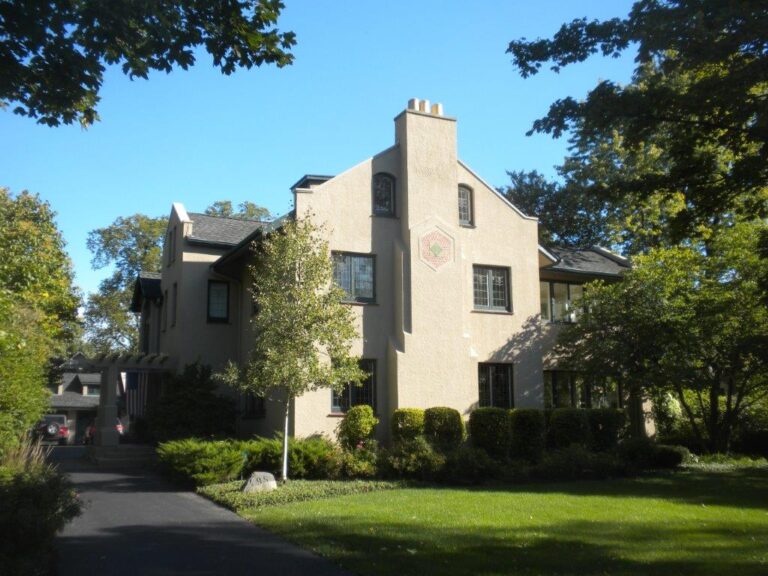

Painted brick is everywhere on the North Shore now, from Tudors in Winnetka to 1950s ranches in Northbrook and Glenview. Done right, it lasts fifteen years and makes a dark, tired house look new. Done wrong, it peels in sheets by the second winter and there is no undo button. This guide covers what we tell homeowners on every brick walk-through: whether to paint at all, what product to use, how the prep works, and what to expect after.

Should You Paint Your Brick at All?
Brick is one of the few exteriors that does not need paint to survive. So the first question is not how, it is whether. Painting makes sense when:
- The brick has already been painted. Once it is painted, it stays painted; stripping is expensive and rarely looks good.
- The brick is mismatched, patched, or stained in ways that cleaning will not fix. Additions where the new brick never matched the old are the classic case.
- The brick itself is low quality, soft, or already sealed with something that failed.
- You want a different look and understand it is permanent. A white or warm-gray painted brick house is a legitimate style choice, not a mistake, as long as you go in knowing the maintenance.
Leave the brick alone when it is sound, the color is fine, and the only problem is dirt or a little efflorescence. A good cleaning and fresh tuckpointing will do more for that house than paint, and it keeps the brick breathing the way it was designed to. Historic homes in Kenilworth, Winnetka, Glencoe, and Lake Forest deserve a hard think before the first coat. If you want to lighten brick without sealing it, limewash or a mineral stain is the better route; see our guide to whitewash vs limewash vs painted brick.
What Chicago Weather Does to Painted Brick
This is the part most guides written somewhere warmer skip. Brick and mortar absorb water. In January that water freezes, expands, and pushes outward. If the coating on the surface cannot let moisture back out as vapor, the water finds the weakest point, which is the bond between paint and brick, and the paint lifts. That is why painted brick fails here more often than in Arizona, and why the product choice matters more than the color.
The rule: the coating has to be breathable. That means a true masonry paint or a mineral-based (silicate) coating with high vapor permeability, not a general exterior latex and never an elastomeric or waterproofing sealer on a wall that gets freeze-thaw. Elastomerics have their place on stucco and block that have been properly detailed; on old North Shore brick they trap water and cause spalling, where the face of the brick pops off.
Fix the Masonry Before You Paint It
Paint does not repair brick. It hides problems for a season and then fails over them. Before any brick job we check for:
- Efflorescence. The white, powdery deposit on the surface is salt carried out by water. It brushes off dry, but it is a sign that water is moving through the wall. Find the source (a failed gutter, a cracked sill, open mortar joints) before painting, or the salt will push the paint off from behind.
- Spalling. Flaking or crumbling brick faces mean water has been freezing inside the brick. Those bricks get replaced, not painted.
- Open or crumbling mortar. Joints get tuckpointed first. Fresh mortar then needs to cure, typically 28 days, before it can be painted; a quick-cure acrylic patching mortar can shorten that for small repairs, but we do not paint over wet lime mortar.
- Old paint. On previously painted brick, every loose edge gets scraped and feathered. If the house predates 1978, the old paint may contain lead and the work falls under the EPA lead-safe rules, which we are certified for.
- Caulk and flashing. Window and door perimeters, sills, and the joint where brick meets siding or trim are recaulked with a quality urethane or elastomeric caulk so water stops getting behind the wall.
Cleaning: Less Pressure Than You Think
Brick gets washed, not blasted. A high-pressure wash drives water deep into the brick and opens the mortar, and the wall then needs a week or more to dry before paint can go on. We use a low-pressure rinse with a masonry cleaner (a TSP-substitute or a mild detergent solution; muriatic acid only on stubborn mineral staining, diluted, with plants and glass protected), scrub by hand where needed, and rinse. Mildew on shaded north walls gets a bleach-based wash. Then the wall dries. Moisture trapped under fresh paint is the single most common reason painted brick fails early.
Primer: The Step That Decides the Lifespan
Bare brick is alkaline and porous, and it drinks the first coat. An alkali-resistant masonry primer locks the surface, evens out absorption so the topcoat does not look blotchy, and gives the paint something to grip. On chalky or previously painted brick we use a bonding masonry primer. Skipping primer to save a day is how a fifteen-year job becomes a four-year job.
Application: Spray It, Then Back-Roll It
Brick has a textured face and recessed mortar joints, and a roller alone leaves the joints half-covered. The right method is to spray each coat and immediately back-roll it with a thick-nap roller so the paint is pushed into every joint and pore. Two full topcoats of a quality 100 percent acrylic masonry paint (or two coats of mineral silicate paint for homeowners who want the most breathable finish) over the primer. We paint in dry weather above 50 degrees with no rain in the forecast for a day on either side, which on the North Shore means late April through October.
Choosing a Color for Painted Brick
Lighter colors are more forgiving on brick: they hide the slight texture variation, reflect heat, and show less chalking as the paint ages. Classic choices on North Shore homes are warm whites, soft grays, greige, and muted creams, with trim a shade or two off the body color and shutters and doors carrying the contrast. Deep colors look dramatic on Tudors and modern homes but show every patch and every chalk line later. Test a sample panel on the sunniest wall and look at it at noon and at dusk. Our paint visualizer lets you try colors on a photo of your own house before you commit.
What Painted Brick Costs You Later
Here is the honest part. Unpainted brick needs a cleaning and some tuckpointing every couple of decades. Painted brick needs a repaint roughly every ten to fifteen years, and the prep for the second repaint is more involved than the first because old paint has to be dealt with. If a future owner wants bare brick back, chemical stripping is slow, expensive, and often leaves the brick looking worse than painted. None of that is a reason not to paint. It is the reason to paint once, properly, with the right product.
DIY or Hire It Out?
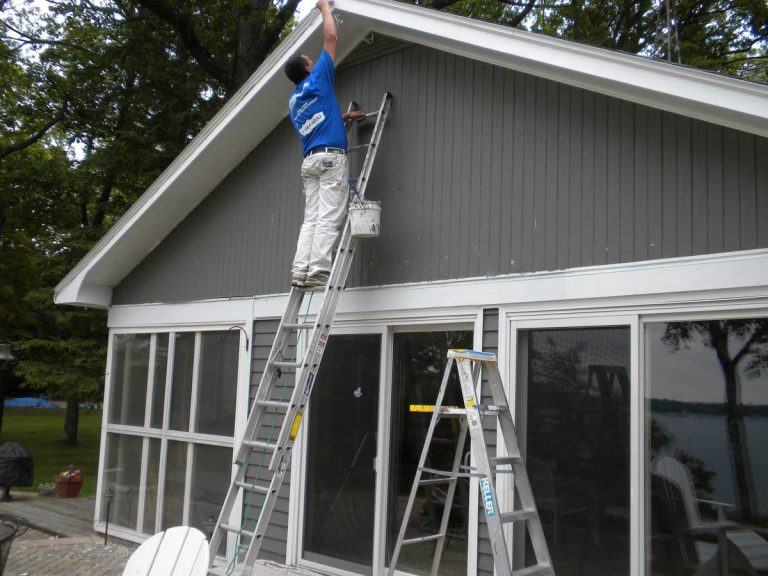
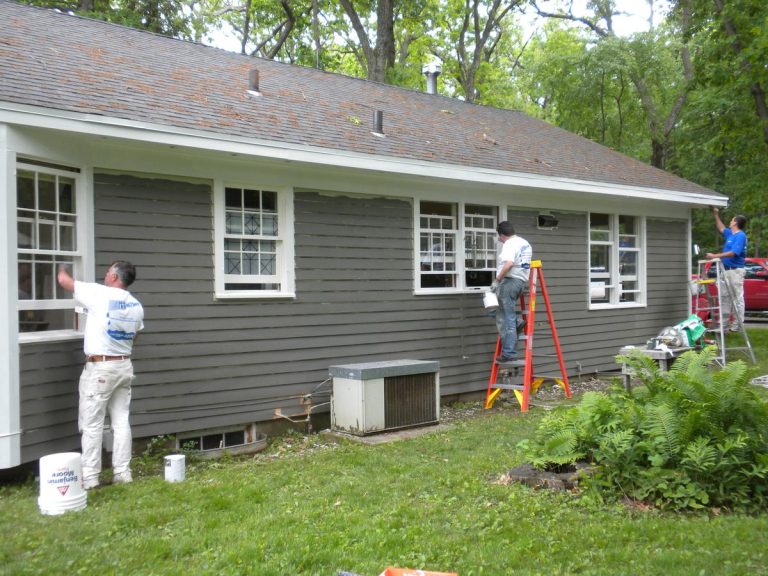
A single garden wall or a small planter is a weekend project with a masonry primer and two coats. A whole house is not. The reasons are height, water, and time: the wall has to be fully dry between every step, the spray-and-back-roll method needs two people working in rhythm, and a two-story brick elevation means scaffolding or lifts that have to be set up safely. Every one of our crew members is OSHA ladder and scaffold certified, and we have been painting North Shore brick since 1969, so we know which houses in which neighborhoods have the soft 1920s brick and which have the dense 1960s stuff.
Questions We Get About Painting Brick
How long does painted brick last in Chicago?
With a breathable masonry system and proper prep, ten to fifteen years before it needs a maintenance coat. Hairline failures usually show first on sills, parapets, and the lowest courses near the ground where water sits.
Can you paint brick in the fall?
Yes, as long as daytime temperatures stay above 50 degrees and nights do not drop near freezing while the paint cures. In practice our brick season runs late April to late October.
Can you paint over efflorescence?
No. It has to be removed dry and the water source fixed first, or it will push the paint off from behind within a year.
Is limewash better than paint?
Limewash is more breathable and ages gracefully, but it is a softer, more weathered look and it needs a mineral-compatible brick. Paint gives a uniform, opaque finish. Which is better depends on the house and the look you want; we will tell you straight on the walk-through.
Can you match the brick color on an addition instead of painting everything?
Sometimes. A masonry stain can shift new brick toward the old without sealing it. When the mismatch is too wide, painting the whole elevation is the cleaner fix.
Do you paint brick in Northbrook, Glenview, and Winnetka?
Yes. Our shop is in Northbrook and we paint brick homes across the North Shore, including Glenview, Winnetka, Wilmette, Evanston, Highland Park, and Deerfield.
Thinking About Painting Your Brick?
Pete will come out, look at the masonry, and tell you whether it should be painted, limewashed, stained, or just cleaned and tuckpointed. If paint is the right answer, you get a written scope and a firm quote for the whole job, prep included. Call (847) 564-4880 or request a free estimate. See our residential painting services for everything else we do on the outside of a house.