
Every Siding Needs Its Own Prep
A North Shore exterior is rarely one material. Cedar on the gables, brick on the first floor, stucco on the Tudor across the street, fiber cement on the new build next door. Paint fails on these houses for the same reason almost every time: the prep and the product were chosen for the wrong surface. We have been painting all of them since 1969, and the job starts with knowing which one you have.

Cedar and Wood Siding
Cedar clapboard, bevel siding, and board-and-batten are the classic North Shore exterior and the most demanding. Wood moves with the seasons, so caulk fails, paint lifts at the edges, and the south and west walls weather first.
- Wash with low pressure and a cleaner that removes mildew without driving water into the boards.
- Scrape and sand every loose edge and feather it smooth. Bare wood gets spot-primed the same day it is exposed.
- Prime for tannin. Cedar and redwood bleed tannins through ordinary primer and stain light colors brown; a stain-blocking oil or acrylic primer stops it.
- Recaulk every joint, window perimeter, and corner board with a flexible urethane or elastomeric caulk.
- Finish with two coats of a 100 percent acrylic exterior paint, or a solid or semi-transparent stain if you want the grain to show.
Cedar Shakes and Shingles
Shingle homes near the lake in Wilmette, Winnetka, and Lake Forest are usually stained, not painted, and stain is the right call: it soaks in, lets the wood breathe, and weathers gracefully instead of peeling. Semi-transparent stains show the grain; solid stains cover like paint but still flex. Previously painted shakes stay painted. Either way, mildew gets killed first and loose shingles get refastened before the finish.
Fiber Cement
Fiber cement siding comes with a factory finish that lasts ten to fifteen years and then chalks and fades. Repainting is straightforward if it is done right: wash off the chalk, prime any bare or patched spots with a masonry-compatible primer, recaulk the butt joints and trim, and apply two coats of 100 percent acrylic. The result lasts as long as the original factory coat.
Aluminum and Vinyl
Aluminum siding chalks heavily; rub a hand on it and it comes away white. It paints well after a thorough wash and a bonding primer made for factory-finished metal, followed by an acrylic finish that resists chalking. Vinyl can be painted too, with two rules: a vinyl-safe color no darker than the original, because dark colors absorb heat and warp the panels, and a paint formulated for vinyl adhesion. Pete will tell you on the walk-through whether your vinyl is a candidate.
Stucco and EIFS
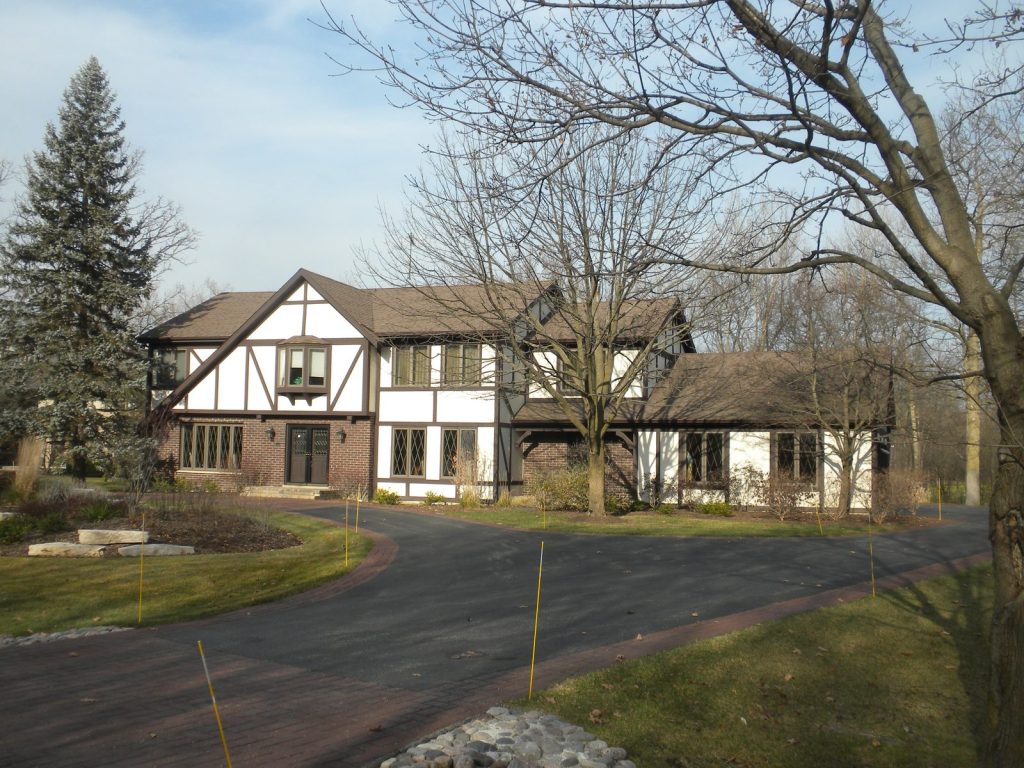
Stucco is cement over lath and wants a breathable coating, not a sealer. Hairline cracks get an elastomeric patching compound; wider cracks get repaired by a mason first. Chalky or previously painted stucco gets a masonry primer, then two coats of a breathable acrylic masonry paint. EIFS, the synthetic stucco on many 1990s and 2000s homes, is a different system: it needs careful inspection for moisture behind it and a coating compatible with the acrylic finish layer. We paint both and we know the difference.
Trim, Soffits, and Fascia
Trim takes the weather first and fails first. Fascia boards behind failed gutters, window sills, and the bottoms of corner boards get the closest look on every job. Rotten sections are replaced with primed wood or PVC before paint; sound trim is scraped, primed, caulked, and finished in a satin enamel that wipes clean and defines the edges of the house.
How an Exterior Job Runs
- Walk-through and written quote. Pete looks at every elevation and names the surfaces, the prep, the products, and the coats. Read how our estimates work.
- Weather. Finish coats go on in dry weather above 50 degrees, which on the North Shore means late April to mid-October. Prep can start earlier. Read when to book exterior painting.
- Four to eight working days for a typical single-family exterior, with a daily cleanup and the landscaping protected throughout.
- Products matched to the surface: Sherwin-Williams Duration or Emerald on siding and trim, stain-blocking primers on cedar, bonding primers on metal and fiber cement, breathable masonry coatings on stucco.
- Lead-safe on homes built before 1978, which covers a large share of the North Shore.
Choosing Colors
Siding color has to work with the brick, the roof, and the style of the house. Our guide to exterior paint colors for North Shore homes walks through Tudors, colonials, brick homes, and cedar, and the paint visualizer lets you test a scheme on a photo of your own house.
Get a Quote for Your Exterior
Call (847) 564-4880 or request a free estimate. We paint siding, stucco, and cedar homes from Northbrook across the North Shore, including Glenview, Winnetka, Wilmette, Evanston, Highland Park, Deerfield, and Lake Forest. See all of our residential painting services.