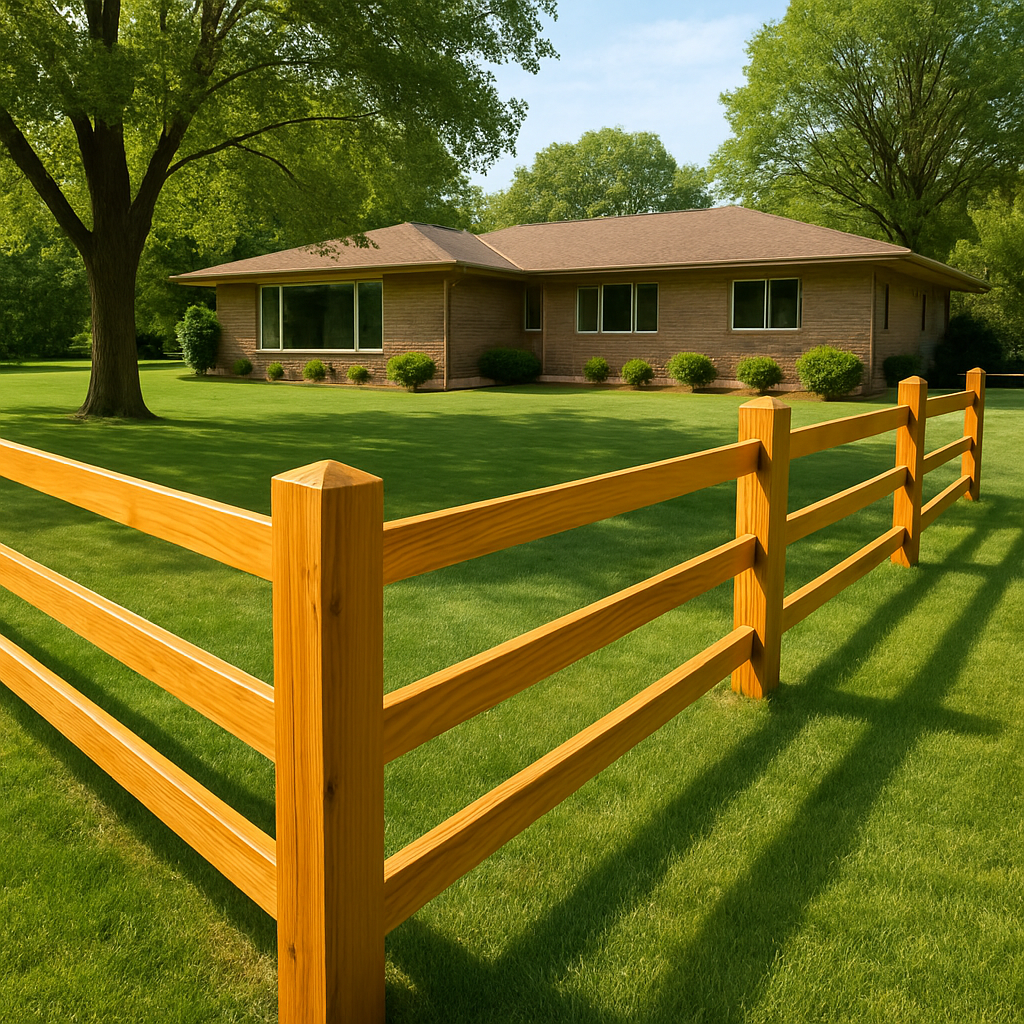


Fence Staining and Refinishing
A cedar fence turns gray in a couple of seasons, and once water gets into bare wood the boards start to cup, split, and rot at the bottom. A good stain every two to three years is the cheapest thing you can do for a fence. It is also the difference between a yard that looks cared for and one that does not.
What We Do
- Repairs first. Loose pickets, split rails, leaning posts, and gates that drag are fixed before any finish goes on.
- Cleaning. Power washing with a wood cleaner to remove gray fibers, mildew, and failed finish. Stripper where the old stain is peeling.
- Drying and prep. The fence dries fully. Rough spots get sanded.
- Stain or paint. Sprayed and back-brushed, both sides if you own both sides, so the stain soaks in instead of sitting on top.
Finish Options
- Semi-transparent stain on cedar shows the grain and lasts two to three years. The most common choice.
- Solid stain hides older, weathered boards and lasts longer. Looks like paint, wears like stain.
- Paint for picket fences, pergolas, and arbors that were painted to begin with.
- Vinyl fencing does not get stained, but a good cleaning every year keeps it from chalking and yellowing.
Fence and Deck in One Visit
If the deck needs it too, we do both in the same trip and you save on the setup. See deck refinishing and the maintenance schedule by wood type.

Call (847) 564-4880 or request a free estimate. Pete walks every job himself and puts the price in writing. Want to try colors first? Use the paint color visualizer on a photo of your own home.